Douglas fir (Pseudotsuga menziesii)
Family: Pinaceae
Categories |
Images |
|---|---|
| Form:
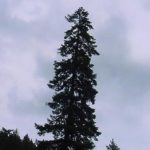
This is a large tree with a pyramid shaped crown. |
|
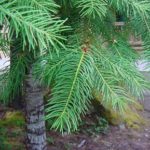
| Needles: Arrangement: 2-ranked Length: 3/4 – 1 1/4″ long Shape: blunt tipped Other: yellow-green to blue-green; very fragrant |
|
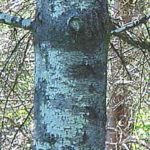
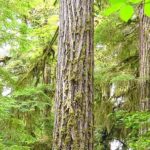
| Bark:
yellow-green to blue-green; very fragrant |
|
| Cones:
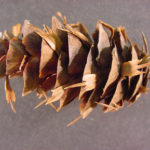
The cones are 3 to 4 inches long with rounded scales and have 3-lobed bracts that extend beyond scales. |
|
| Distinguishing Characteristics:
This species has two ranked needles, bracts on cones and smooth gray bark that turns red at maturity. |
|
| Range:
This is a western species. It occurs between 2,000 and 10,000 ft., mainly along the coast or on rocky soils and mountain slopes. |
|
| Silvics:
This species is intermediate in shade tolerance and grows best on moist deep soils of northern exposure. It can endure considerable drought conditions and self-prunes poorly. |
|
| Ecological and Cultural Importance:
This is a major timber producing species in the western U.S. It is also grown and sold during the holiday season for Christmas trees. |