Eastern cottonwood (Populus deltoides)
Family: Salicaceae
Categories |
Images |
|---|---|
| Form:
This is a medium-sized tree reaching 70-100 ft. in height and 2.5- 4 ft dbh. It generally has a thin, spreading crown and a straight bole. |
|
|
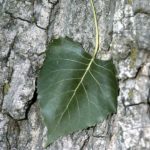
Leaves: Shape: deltoid with truncate base Margin: crenate-serrate Texture: glabrous Variation: pinnate |
Photo Courtesy: Robert H. Mohlenbrock, USDA NRCS Plants Database |
| Bark:
The bark is yellow-green and smooth when young becoming ashy gray, thick, and furrowed with age* |
|
| Twigs and Buds:
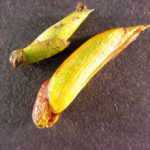
Terminal buds have a shiny brown appearance and are conical in shape. |
|
| Flowers and Fruit:
Silky-haired seeds develop with shells that drop in early spring; |
|
| Distinguishing Characteristics:
The petiole is long and flattened. The buds have a resinous strong scented odor. Look for a more acuminate leaf tip and serrations with more of a hook shape to distinguish this species from big-toothed aspen. |
|
| Range:
Eastern cottonwood is found north as far as New York, south into Florida, and west into Texas, but it is concentrated in the river bottoms of the eastern Great Plains. |
|
| Silvics:
This species is very intolerant and occurs alluvial bottoms. |
|
| Ecological and Cultural Importance:
This species is important for lumber, pulpwood and is slightly non-resistant to decay. Provide valuable habitat for deer and grouse in the Great Plains. |