alternate-leaf dogwood (Cornus alternifolia)
Family: Cornaceae
Categories |
Images |
|---|---|
| Form:
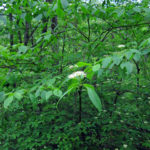
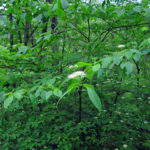
This is a large shrub or small tree reaching an average maximum height of 20-30 ft. It has slender branches and a flat-topped crown. |
|
|
Leaves: Shape: lanceolate to elliptical Margin: entire Texture: glabrous |
|
| Bark:
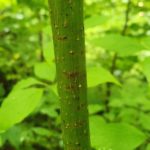
The bark is green to red-brown when young and forms longitudinal furrows with age. |
|
| Twigs and Buds:
Twigs are red and slender. The buds show only 2-3 scales. |
|
| Flowers and Fruit:
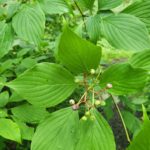
It produces blue to blue-black berries and the flower is white. |
|
| Distinguishing Characteristics:
As the name implies, it is alternate, which is one way to distinguish it from flowering dogwood. |
|
| Range:
It occurs throughout the Appalachians south into Florida, west into Mississippi, and north as far as Minnesota. |
|
| Silvics:
This species is tolerant of shade and prefers moist uplands, low slopes, and coves. |
|
| Ecological and Cultural Importance:
Various species of birds as well as black bears feed on the fruit. It is fairly resistant to dogwood anthracnose which is a fungus that hinders flowering dogwood. |