white walnut (Juglans cinerea)
Family: Juglandaceae
Categories |
Images |
|---|---|
| Form:
This is a small to medium-sized tree ranging from 40-60 ft. in height. It has a spreading crown and often develops a twisted trunk. |
|
|
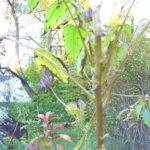
Leaves: Shape: oblong-lanceolate Margin: serrate Texture: rachis is pubescent; leaflets rugose above, pubescent below |
|
| Bark:
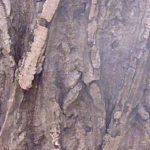
It has light gray smooth bark when young and develops shallowly furrowed with broad ridges when older. The ridges are often flattened with a lighter brown color *. |
|
| Twigs and Buds:
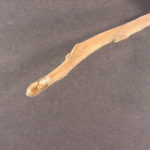
The twigs are stout, lenticels, and have a chambered pith. Terminal buds are elongated and blunt at the tip. |
|
| Flowers and Fruit:
The oblong shaped sticky fruit can be attached individually or in clusters. |
|
| Distinguishing Characteristics:
Look for the flattened lighter colored ridges and the different shaped nut to distinguish this species from black walnut. |
|
| Range:
It has a large range concentrated in the Central Hardwood Region extending into New England and the southern Lake States. However, very few large populations exist. |
|
| Silvics:
It is shade-intolerant and prefers deep moist loams, but can also be found on dry limestone rich sites. It is never found in pure stands. |
|
| Ecological and Cultural Importance:
Populations of this species have been severely hindered dying by a canker causing fungus. |