black locust (Robinia pseudoacacia)
Family: Fabaceae
Categories |
Images |
|---|---|
| Form:
The tree is medium sized reaching 40 to 60 ft. in height and 1 to 2 ft. in dbh. It often forms thickets by suckering. |
|
|
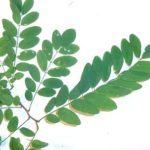
Leaves: Shape: oval Margin: entire Texture: N/A Variation: N/A |
|
| Bark:
The bark is blackish in color and is deeply furrowed with interlacing, rounded ridges that resembles a woven rope. |
|
| Twigs and Buds:
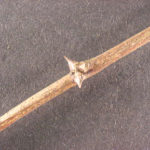
Twigs have stipular spines from each side of the node. |
|
| Flowers and Fruit:
The flowers appear in a drooping raceme and are all white and fragrant. The fruit is a brown, flat, oblong pod that resembles a large pea pod. |
|
| Distinguishing Characteristics:
This tree has a pea pod fruit, spines on the twigs and bark blackish in color and is deeply furrowed with interlacing, rounded ridges that resembles a woven rope. |
|
| Range:
This species occurs from southern Ohio to northern Alabama, east to South Carolina. |
|
| Silvics:
This species is intolerant and occurs from dry, moist soils to dry slopes. It is also noted as a pioneer species. |
|
| Ecological and Cultural Importance:
The tree is a nitrogen fixer and has a very hard wood, used for fence posts. |