box elder (Acer negundo)
Family: Aceraceae
Categories |
Images |
|---|---|
| Form:
This is a medium-sized tree generally 30 to 60 ft. in height and 2 ft. in width. It has an irregular bole, shallow root system, and a spreading crown. |
|
|
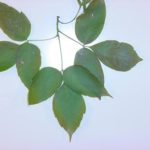
Leaves: Shape: Varies between ovate, oval obovate. or ovate-lanceolate Margin: Coarsely serrate or lobed Texture: Glabrous or slightly pubescent above, pubescent along the veins below Variation: N/A |
|
| Bark:
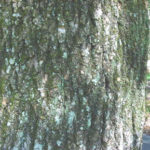
It has thin and light brown to gray bark with shallow interlacing ridges. Older trees are slightly furrowed. |
|
| Twigs and Buds:
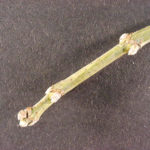
Twigs are stout, green to purplish green. Leaf scars are narrow, connecting in raised points. Buds are white and hairy with the lateral buds appressed. |
|
| Flowers and Fruit:
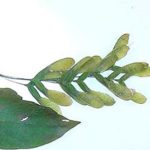
Flowers are yellow-green drooping racemes, occurring in drooping racemes. Fruit occurs in the form of paired V-shaped samaras. |
|
| Distinguishing Characteristics:
It is opposite with compound leaves and green twigs. There is a square shape to it’s leaflets. It is in the maple genus |
|
| Range:
Box elder is found from Nova Scotia west to Southern Alberta and south all the way to Guatemala. |
|
| Silvics:
It grows best on moist sites along lakes, streams and flood plains, but it is also capable of existing in extreme climates and can withstand short periods of flooding. |
|
| Ecological and Cultural Importance:
There is very little commercial value in the wood, but it provides important shelter for many wildlife species. It serves as a pioneer species on moist sites helping to stabilize soils in disturbed areas. This tree could be poisonous to livestock. |