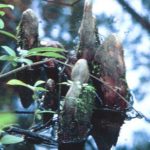
bald cypress (Taxodium distichum var. distichum)
Family: Cupressaceae
Categories |
Images |
|---|---|
| Form:
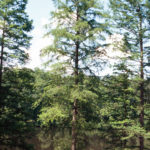
A large tree with a triangular shaped crown and a tapered base, often with knees that protrude from the forest floor or water around the base of the tree. |
|
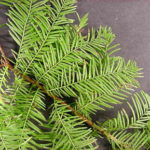
| Needles: Arrangement: 2 ranked Length: 1/4 – 1/5 inches Shape: acicular |
|
| Bark:
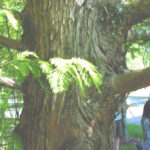
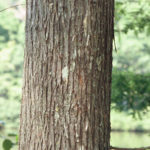
Dark red-brown to gray with shallow furrows, fibrous as well. |
|
| Cones:
Monoecious. Cones are found in clusters of 2 or 3, maturing in December. |
|
| Distinguishing Characteristics:
Usually found only in wet areas, with characteristic knees protruding from the ground or water around the base of the tree.The leaves are feathery like and deciduous. Trunk is usually buttressed at the base. |
|
| Range:
Grows along the Atlantic Coastal Plain from southern Delaware to southern Florida, west to southeastern Texas. |
|
| Silvics:
Intolerant. Grows best on drier sites but cannot compete with the faster growing hardwoods. As a result it is restricted to wet soils containing clay, or fine sand where moisture is abundant and fairly permanent. |
|
| Ecological and Cultural Importance:
Wood is extremely resistant to decay and is used in building construction, fence posts, doors, blinds, and flooring. Seeds are browsed by wild turkey, wood ducks and squirrels. The seed is a small part of the diet for waterfowl and wading birds. Area under and around tree provides watering places for a multitude of birds, mammals, and reptiles of the surrounding wetlands. |