bitternut hickory (Carya cordiformis)
Family: Juglandaceae
Categories |
Images |
|---|---|
| Form:
This is a medium-sized reaching a height of 60 to 80 ft. and 1 to 2 ft. in width. It has a rounded, open crown. |
|
|
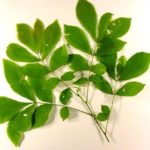
Shape: Alternate; pinnately compound with 7 to 11 leaflets Margin: Lanceolate Texture: Serrate Variation: Glabrous above and Glabrous or pubescent below |
|
| Bark:
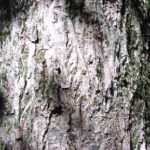
Bitternut has smooth bark when it is young. When is matures shallow furrows and narrow, small interlacing ridges develop. |
|
| Twigs and Buds:
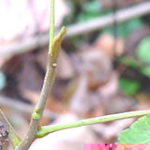
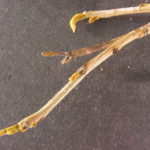
The twigs are moderately stout, varying from a grayish-brown to greenish-brown color. Terminal buds are sulfur-yellow, pubescent, and valvate. |
[if 483 not_equals=””]
|
| Flowers and Fruit:
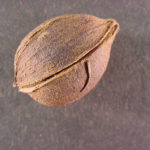
The nut, which develops in September, is somewhat globose but flattened with a thin husk that has 4 distinct wings. The male flowers are catkins with 3 hanging from one stalk. Female flowers are short and 4-angled. Flowers appear from April to May. |
|
| Distinguishing Characteristics:
One of the best ways to identify this species is by looking for the sulfur-yellow terminal bud. Also make sure it is alternately arranged and has pinnately compound leaflets. |
|
| Range:
Bitternut is found in southern Quebec, west to northern Minnesota, south to eastern Texas, and northern Florida. It encompasses the eastern U.S. and is the only member of the pecan family in the north. |
|
| Silvics:
It occurs on a variety of sites including both dry uplands and moist woods and bottoms. It reaches it ‘s largest size in the rich bottomlands of the lower Ohio River Basin and is not found at the higher elevations in the Appalachian Mountains. Bitternut is the shortest lived of the hickories. |
|
 [/if 112]