honeylocust (Gleditsia triacanthos)
Family: Caesalpiniaceae
Categories |
Images |
|---|---|
| Form:
This is a medium-sized tree reaching 40-90 ft in height. It generally has a open crown. |
|
|
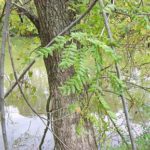
Leaves: [if 789 not_equals=””] Shape: small and oblong leaflets with mucrose tip[/if 100] Margin: entire Texture: glabrous Variation: N/A |
|
| Bark:
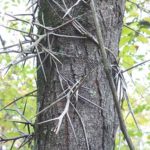
The bark is thin and smooth when young, but develops a dark purplish gray tint with large thorns. It often peels in large pieces. |
|
| Twigs and Buds:
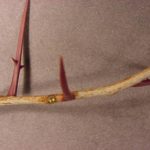
It has large 2-3 branched thorns extending from the twigs. |
|
| Flowers and Fruit:
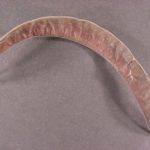
Flowers are greenish yellow and found in clusters at the leaf base. The fruit is a legume that is found in a large twisted pod. |
|
| Distinguishing Characteristics:
Look for thorned branches, the pea-pod seed, and bi-pinnately compound leaves. |
|
| Range:
It is found in Michigan south to west Texas and east along the western slopes of the Appalachians. |
|
| Silvics:
Honeylocust in intolerant of shade. It occurs naturally on moist bottom lands, but can survive when planted on drier sites. |
|
| Ecological and Cultural Importance:
It is often used as a local source of wood for fence posts and furniture. Livestock and various species of wildlife eat the seed pods. |