pignut hickory (Carya glabra)
Family: Juglandaceae
Categories |
Images |
|---|---|
| Form:
This is a medium to large tree reaching 70-100 ft. with a dbh of 1-2 ft. |
|
|
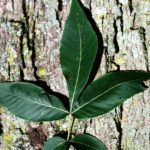
Leaves: [if 789 not_equals=””] Shape: lanceolate[/if 100] Margin: finely serrate Texture: glabrous above and pubescent below |
Photo Courtesy: Robert H. Mohlenbrock, USDA NRCS Plants Database |
| Bark:
The bark is thick, firm, dark gray and closely and deeply furrowed. It has interlacing ridges that form diamond shapes. |
|
| Twigs and Buds:
The twigs are glabrous, slender, and reddish-brown in color. |
|
| Flowers and Fruit:
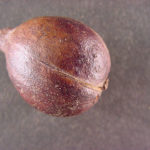
This species produces a pear-shaped nut, with a thin husk that typically has a teardrop point at one end* |
|
| Distinguishing Characteristics:
It has a glabrous petiole and rachis which distinguishes it from the pubescent rachis on mockernut hickory. The teardrop pointed nut is also unique to pignut. |
|
| Range:
This species is widely distributed across the eastern United States: north into Maine, across the central hardwood region into Iowa, south into central Florida and east to the Atlantic coast. |
|
| Silvics:
Pignut has intermediate tolerance of shade. It grows well on both dry and mesic upland sites. |
|
| Ecological and Cultural Importance:
The wood is used in specialty applications. Deer and small mammals browse it’s leaves and twigs, and feed on the nuts. |