shagbark hickory (Carya ovata)
Family: Juglandaceae
Categories |
Images |
|---|---|
| Form:
This is a medium size tree reaching 70-80 ft in height and 1-2 ft in diameter. It has a small open crown and normally a clear straight bole. |
|
|
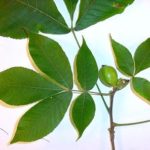
Leaves: [if 789 not_equals=””] Shape: ovate-lanceolate[/if 100] Margin: finely serrate Texture: glabrous above and pubescent below |
|
| Bark:
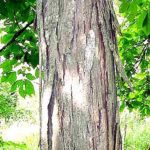
The bark is thin and gray when young breaking into 1-3′ long plates that are free at one end with age. |
|
| Twigs and Buds:
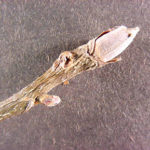
The twigs are reddish-brown, stout, and lenticels. The relatively large terminal bud has pubescent scales.* |
|
| Flowers and Fruit:
The nuts are slightly rounded and occur in pairs. The brown husk has a rough texture with indentations at the suture. |
|
| Distinguishing Characteristics:
Look for a large terminal bud characteristic of hickories, and the the large pieces of shedding bark. |
|
| Range:
It occurs north as far as New York west to southern Wisconsin, south to Mississippi, and east to the Atlantic coast. |
|
| Silvics:
Shagbark has intermediate tolerance to shade. It typically grows on moist and mesic upland sites. |
|
| Ecological and Cultural Importance:
It produces a valuable wood used for furniture, flooring, and cabinetry. The mast is eaten by a variety of wildlife species. |