Eastern hophornbeam (Ostrya virginiana)
Family: Betulaceae
Categories |
Images |
|---|---|
| Form:
The tree is small ranging up to 35 ft. in height and a dbh of 1ft. |
|
|
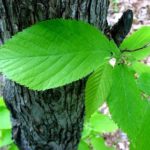
Leaves: [if 789 not_equals=””] Shape: ovate-oblong[/if 100] Margin: doubly serrate Texture: glabrous above; pubescent in the axils of veins & on the petiole Variation: parallel |
|
| Bark:
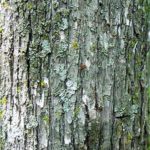
The bark is thin, gray and broken into thin strips. It look similar to a “cat scratch”. |
|
| Twigs and Buds:
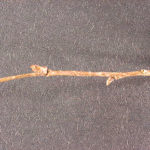
The twigs are brownish-red and occasionally pubescent. The buds, in a cross section, are cylindrical with a grooved scales. |
|
| Flowers and Fruit:
The fruit is very distinctive, resembling hops. It is a 1/4 inch nutlet enclosed in dried, leafy, papery sac in clusters. |
|
| Distinguishing Characteristics:
This species has leaves with doubly serrated margins, shredding bark, a nutlet for a fruit, and twigs that are slender and brownish-red. |
|
| Range:
Occurs from Maine south to North Dakota and south to northern Florida. |
|
| Silvics:
This species is very tolerant and occurs on moist to mesic upland. It is also noted as being an understory species. |
|
| Ecological and Cultural Importance:
The wood is used in posts and golf club handles. The twigs are browsed by white-tailed deer. The fruits are browsed by various species of game birds. |