post oak (Quercus stellata)
Family: Fagaceae
Categories |
Images |
|---|---|
| Form:
This is a medium sized tree 50 – 60 ft. in height and 1-2 ft. in dbh. |
|
|
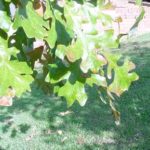
Leaves: Shape: form a cross; cuneate base Margin: entire Texture: glabrous and dark green above; glaucous and pubescent below Variation: pinnate |
|
| Bark:
The bark is gray with light patches, shallow furrows and narrow ridges similar to white oak but tighter. |
|
| Twigs and Buds:
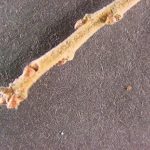
Twigs are stout and somewhat tomentose. The buds are sub-globose and covered with chestnut brown scales. |
|
| Flowers and Fruit:
Green to red appearing in catskins. |
|
| Distinguishing Characteristics:
Look for the gray tomentose twig, cruciform (cross shaped) leaf shape, and scaly bark similar to white oak. |
|
| Range:
Massachusetts south to Florida west to Oklahoma and north to southern Indiana. |
|
| Silvics:
It has intermediate tolerance of shade and most often occurs on dry uplands commonly on heavy soils. |
|
| Ecological and Cultural Importance:
Wood resistant to decay, used in flooring siding and fence posts. Provides habitat for birds and mammals. Acorns eaten by deer, wild turkey, and rodents. |