sugar maple (Acer saccharum)
Family: Aceraceae
Categories |
Images |
|---|---|
| Form:
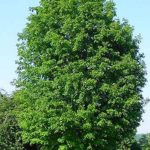
In the open, forms a large, dense and rounded crown. In forest conditions, the bole is clear straight and full. |
|
|
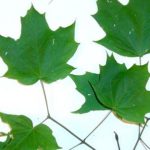
Leaves: Shape: 5 lobes with u-shaped sinuses Margin: entire Texture: N/A Variation: palmate |
|
| Bark:
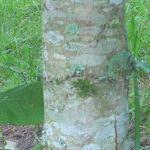
Light gray to grayish-brown, becoming rough, peeling from the top and bottom of each piece that is being shed when older. |
|
| Twigs and Buds:
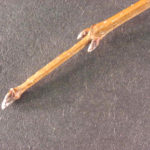
Shiny reddish-brown to brown with light colored lenticels. Terminal buds are long and sharply pointed. |
|
| Flowers and Fruit:
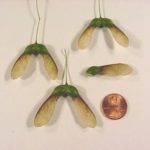
Flowers are bright yellow and long pedicelled. The fruit is a samara. |
|
| Distinguishing Characteristics:
5 lobed leaves, with a definite u-shape sinus, palmately shaped leaves, gray bark with deep furrows (on older trees). |
|
| Range:
Grows from Nova Scotia west to Minnesota, south to northeastern Texas and extending eastward into Georgia. |
|
| Silvics:
Tolerant. Occurs in rich, mesic woods but can also grow in drier uplands. It grows in coves and other sheltered areas. Often associated with stream banks, valleys, canyons, and wooded natural levees. |
|
| Ecological and Cultural Importance:
Commonly used to make furniture, paneling, flooring, and veneer. It is also used for bowling pins, and musical instruments. It is browsed by white-tailed deer, moose, and snowshoe hare. Red squirrel, gray squirrel, and flying squirrels feed on the seeds, buds, twigs, and leaves, porcupines have been know to consume the bark. |