white oak (Quercus alba)
Family: Fagaceae
Categories |
Images |
|---|---|
| Form:
Medium to large tree reaching 60 – 80 ft. in height and a dbh of 3 – 4 ft. with spreading branches. |
|
|
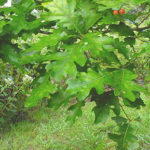
Leaves: Shape: 7-9 lobes, rounded; not bristle tipped Margin: entire Texture: glabrous above, glaucous below |
|
| Bark:
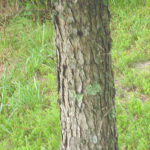
It has light ashy-gray colored bark that can be very thick. |
|
| Twigs and Buds:
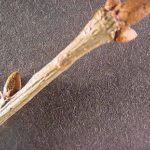
Twigs are light reddish-brown in color, stout, and glabrous. Each twigs has multiple globose terminal buds. |
|
| Flowers and Fruit:
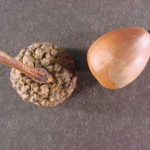
Acorns mature in one season. The warty cap covers about 1/3 of the acorn. |
|
| Distinguishing Characteristics:
It has 7 – 9 lobed leaves that do not come to a distinct point like most of the red oak species. It can be distinguished from the post oak by the different leaf shape. It does not have the cross-shape as does post oak. |
|
| Range:
Southwest Maine to Florida west to eastern Texas |
|
| Silvics:
It is intermediately tolerant of shade and occurs on mesic to dry upland soils. |
|
| Ecological and Cultural Importance:
Wood used in furniture, veneer, and paneling. Deer browse on twigs and leaves. Acorns eaten by a variety of animals. Most important consumers of acorns include: black bear, mallard, wild turkey, and ring neck pheasant. Also very long lived, up to 800 years. |