blue ash (Fraxinus quadrangulata)
Family: Oleaceae
Categories |
Images |
|---|---|
| Form:
This is a medium sized tree with a height to 80 feet tall and a width of 2 ft. It has a short bole and an irregular crown. |
|
|
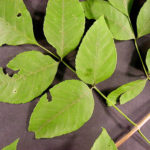
Leaves: Shape: lanceolate Margin: serrated Texture: glabrous Variation: pinnate |
|
| Bark:
Blue ash bark is brown to ash gray, and rough and scaly when young. When the tree matures it forms irregular fissures and scaly ridges giving a shaggy appearance. |
|
| Twigs and Buds:
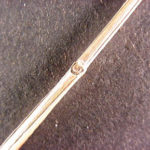
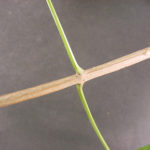
It has a relatively stout twig that is 4-angled. The leaf scars are notched and the buds are gray to reddish brown in color. |
|
| Flowers and Fruit:
The flowers occur in panicles that appear before the leaves. The fruit is a samara, with a wide wing and a flattened seed. |
|
| Distinguishing Characteristics:
It has opposite compound leaves and the twigs have 4 distinct edges. The inner bark turns blue when exposed to air. |
|
| Range:
Blue ash is found in Southern Wisconsin west to Ohio, south to northern Georgia and west to eastern Oklahoma. |
|
| Silvics:
This species in most common on calciferous dry limestone uplands. |
|
| Ecological and Cultural Importance:
It was once used for blue dye by the pioneers. The wood is used in flooring, baseball bats, furniture, tool handles, barrels and crates. |