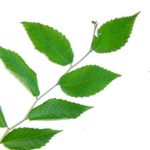
slippery elm (Ulmus rubra)
Family: Ulmaceae
Categories |
Images |
|---|---|
| Form:
Medium sized, 60 – 70 ft. in height, 18 – 30 in. in dbh. |
|
|
Leaves: Shape: elliptical to obovate Margin: doubly serrate Texture: scabrous above, pubescent below Variation: parallel |
|
| Bark:
Red brown bark, non-diamond shaped fissures, does not show patches or streaks when sectioned. Mucilaginous inner bark. |
|
| Twigs and Buds:
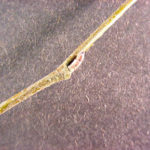
Ash to brown gray in color, scabrous, buds pubescent. Buds are chestnut brown to black in color. |
|
| Flowers and Fruit:
Flowers appear in short pedicelled fascicles. |
|
| Distinguishing Characteristics:
Doubly serrated leaf, scabrous leaf and twig, bud more stout that American Elm buds. |
|
| Range:
Southern Maine west to Nebraska, south to Louisiana. |
|
| Silvics:
Intermediate tolerance. Rich, moist bottomlands, along streams. |
|
| Ecological and Cultural Importance:
Not important for lumber, used in manufacture of boxes, baskets and crates. Seeds are eaten by birds and small mammals, twigs are browsed by deer and rabbits. |